

We often see and treat patients of all ages with ingrown toenails in our clinic. One of the most common questions we are asked is: does it hurt getting an ingrown toenail removed?
Firstly let’s recap to make sure we all know what an ingrown toenail is. Then we’ll talk about the treatment options – including ingrown toenail surgery. An ingrown toenail is a condition where the corner or edge of the toenail is too wide or curves around and digs into the skin – usually affecting the big toes. The medical term is onychocryptosis.
We discussed everything you need to know about ingrown toenails in a previous post titled “Everything you need to know about ingrowing toenails“. This included what they are, how to prevent them and what causes them. Anyone, of any age, from children to adults can develop an ingrown toenail. Patients will usually report feeling soreness, swelling and redness, and the area will feel warm. If the toenail breaks the skin, bacteria can get into the wound and lead to an infection. If it’s left untreated, the skin may start to grow back over the ingrown part of the nail.
Surgery for an ingrown toenail is usually required if the foot hasn’t been treated early enough with other remedies. If you’re suffering from pain and discomfort then it may be time to consult your Podiatrist for specialist advice. Surgery of any kind can feel frightening so we’ve put this post together to give you all the ins-and outs of this minor procedure.

Diagnosing an ingrown toenail
Diagnosing an ingrown toenail is usually very straightforward. We often simply know by seeing the toe and talking to the patient. It rarely requires diagnostic labs, images or other tests to be performed unless there is concern over the underlying cause of the problem.
There are some treatments you can try yourself at home such as soaking your feet in warm water for about 15 to 20 minutes, three to four times per day; keeping your feet and shoes dry and taking over-the-counter medicines for the pain or antibiotics for an infection.
If these treatment methods have failed to resolve the issue within a few days, then an appointment with a Podiatrist is important to review, provide treatment and assess whether surgery might be recommended to resolve the problem.
Surgery to remove an ingrown toenail
If an ingrown toenail doesn’t improve with more modest treatment options then a Partial Nail Avulsion with phenolisation (PNA) is the most common procedure to resolve the issue. This minor surgery takes about 30-45 minutes, during which, your Podiatrist will permanently remove the ingrown section of your toenail. This is a really effective procedure for ingrown toenails and it can be done at the Podiatry Clinic.
Sometimes people can feel reluctant to have some of their nail removed. We reassure patients that ingrown toenail surgery is a painless procedure as it’s performed using a local anesthetic. Although there might be some discomfort when that wears off, this can be managed with over the counter painkillers and once fully recovered, the toenail, although slightly narrower, will still look normal.
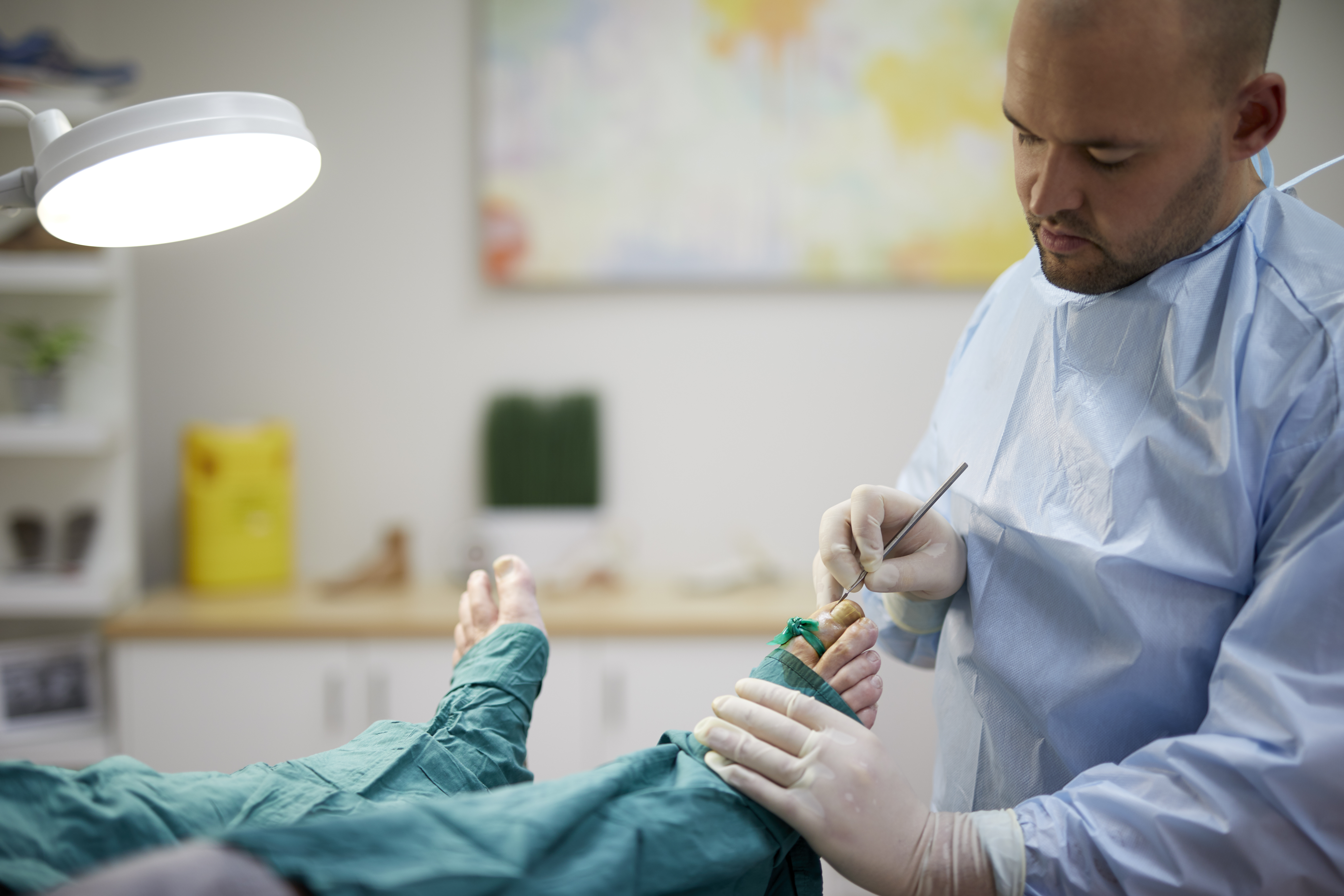
Here’s what happens…
Step one – clean everything
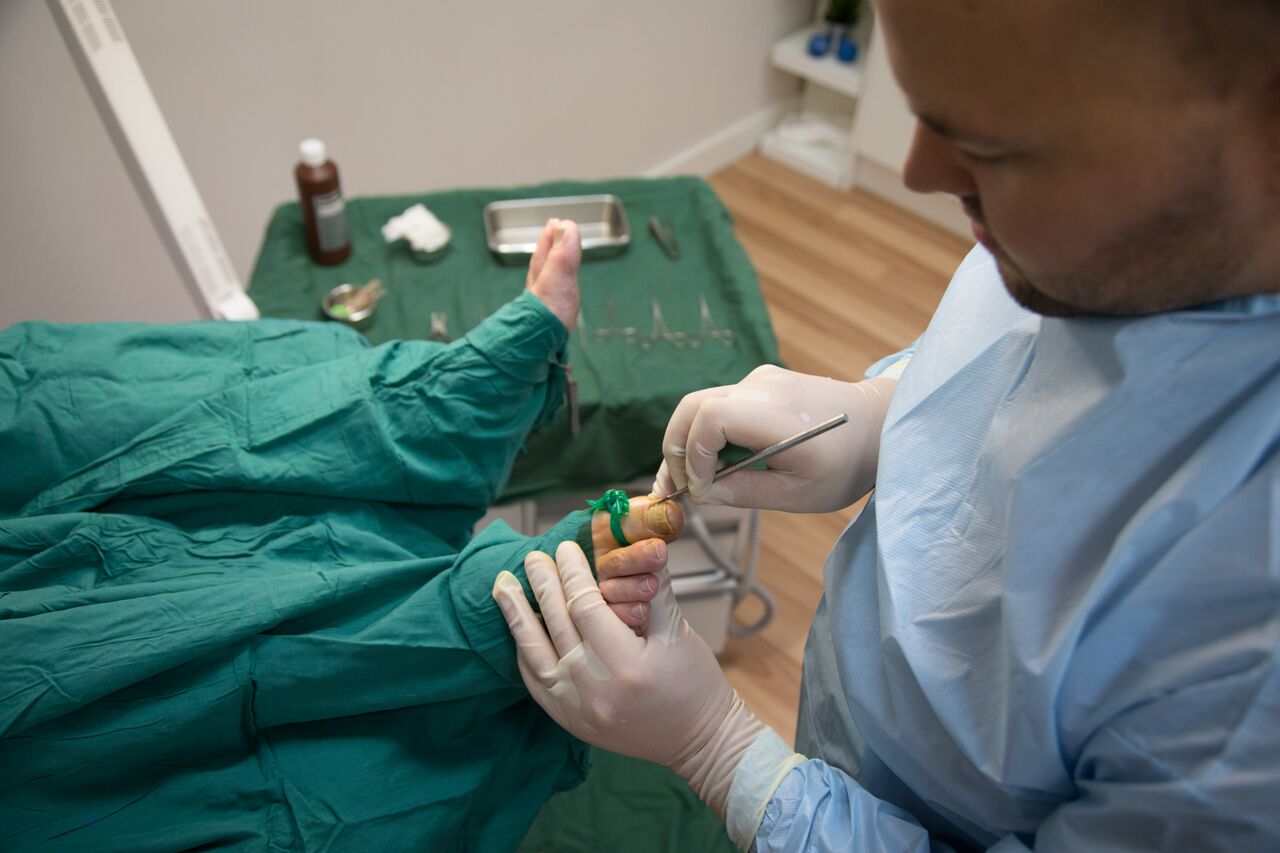
Like with any procedure, we clean the area first. We prepare and sterilise the environment for the surgery including sterilisation of a specific surgery pack with the instruments required to complete the procedure.
Step two – numb the toe
We then numb the toe with a local anesthetic injection into the side of the toe where the nerves run. This takes about 15-20 seconds to complete. After the injection takes effect, the numbness sets in. You will be awake and comfortable for the whole procedure. Because the anesthesia is administered locally, there is a minimal effect on driving or walking after the surgery but most importantly it means that you won’t feel any pain during the surgery.
Step three – apply a tourniquet
After the toe is numb, a tourniquet (snug elastic band) is applied where your toe joins your foot. This is to limit blood flow for better visibility during the surgery. We then cleanse the toe and surrounding areas with betadine to prevent infections.
Step four – remove the part of the nail that is digging into your skin
Using special tools, we separate your toenail from the nail bed, cut the nail edge vertically from the ingrown side down to the cuticle and separate it from the nail plate. Then we remove the cut section. We make sure we remove enough of the toenail to prevent the condition from recurring whilst attempting to leave enough so that the toenail has a normal appearance once it’s all healed.
Step five – apply phenol
We then apply a liquid phenol* acid for a minimum of six minutes in total. This destroys the nail matrix (the area beneath the cuticle that produces nail-creating cells) which stops the nail from growing back.Then we flush out the toe with a betadine solution to prevent infection.
*Phenol is safe and approved for use by the Therapeutic Goods Administration (TGA) in Australia.
Step six – remove the tourniquet
Once the procedure is completed, we take off the tourniquet.
Step seven – bandage
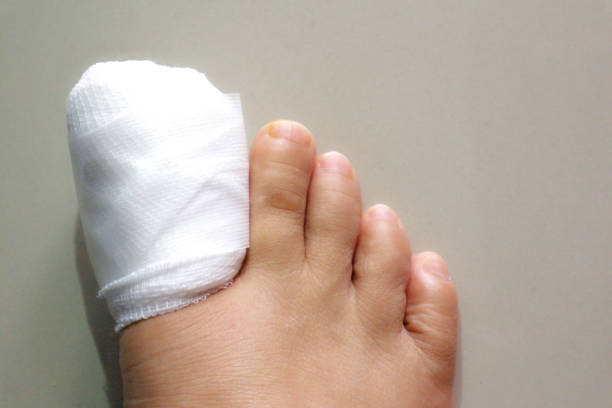
Once we’ve used the betadine ointment and bandaged up the toe, you can go home and relax!
Preparing for surgery on an ingrown toenail
We suggest that patients bring open-toe shoes to wear after the procedure. The dressing can be a little bulky so your foot is unlikely to fit into your normal shoes until the dressing is removed three days after surgery.
You might also want to arrange transport for after the procedure if you don’t want to drive yourself.
Aftercare and recovery from ingrown toenail surgery
Immediately after surgery
After the surgery, your toe will be bandaged and you can go home! We’ll provide you with follow-up instructions on exactly how to care for your foot and book a follow up appointment to check that the toe is healing properly.
Once you’re back at home, rest and keep your foot raised above hip-height for the next one to two days. There is usually only very slight pain once the anesthetic wears off. If you do experience discomfort, we advise taking over the counter pain relief medication. Sometimes antibiotics are prescribed to prevent infection. Keep the dressings dry for 3 days.
It’s quite normal that some bleeding can become visible through the bandage after the procedure. After 3 days we ask you to soak the toe/s in warm salt water bath for 10 minutes, then remove the dressings and continue to soak for 5 minutes. Continue to soak and dress daily from then onwards.
You should continue to wear open toe or loose fitting shoes for as long as you need to – often this will be for around a week, to avoid pressure on the toe whilst it’s healing so you’ll be more comfortable and to allow your toe to heal properly.
Up to two weeks after surgery
You won’t need to use crutches after the surgery but it is best to avoid weight-bearing and strenuous activity (including the gym and weight-lifting) for two weeks.
Do daily salt water soaks and dressing with betadine until your toe heals. We recommend doing this twice a day for one to two weeks as this can also help to prevent infection.
Four to six weeks after surgery
The good news is, you’ll be back to normal in a few days and fully healed in 4 – 6 weeks!
Risks and complications of ingrown toenail surgery
Like with all surgery, nothing is guaranteed and sometimes complications can occur. But these are generally easy to manage. If you follow our advice on how to care for the toenail after the procedure, then you’re very unlikely to experience problems.
The main risks are:
- infection
- prolonged tenderness
- a slow-healing wound
- recurrence – this is where the toenail grows back again.
On rare occasions the surgery is not as effective as hoped and ingrown toenails can reoccur. The chances of the nail re-growing are reduced because we use phenol to prevent the nail re-growing. If it does happen to re-grow, we remove that section of nail again and use phenol to stop it from returning.
If you are prone to infection, we may prescribe oral antibiotics to take after the procedure.
Prognosis after ingrown toenail surgery
The overall appearance of your nail will not change significantly after the surgery. With proper aftercare to ensure the toe heals properly, the nail should regrow to its original appearance within a few months. However, an ingrown toenail can come back if you wear poorly fitting shoes, or if your toenail just naturally grows in a curved direction.

When is ingrown toenail surgery is not possible
There are some cases where ingrown toenail surgery is not possible. Such cases include:
- during pregnancy or breastfeeding
- If there is a diminished blood supply to your feet (Peripheral Vascular Disease) that may effect the chance of effective healing
- When someone has an allergy to local anaesthetic
- or if your toenail is severely infected. You may be advised to start a course of antibiotics to ensure the infection is gone before the surgery.
What should you do next?
If you think you have an ingrown toenail and would like an assessment and some advice then book an appointment at your nearest clinic.
At Your Foot Clinic, our Podiatrists provide a thorough analysis of your feet, footwear, lifestyle and needs in order to tailor a treatment plan to suit you.
You can call our clinic to arrange a COVID-Safe appointment. Our entire team has completed COVID-19 Infection Control Training and are here to help.