

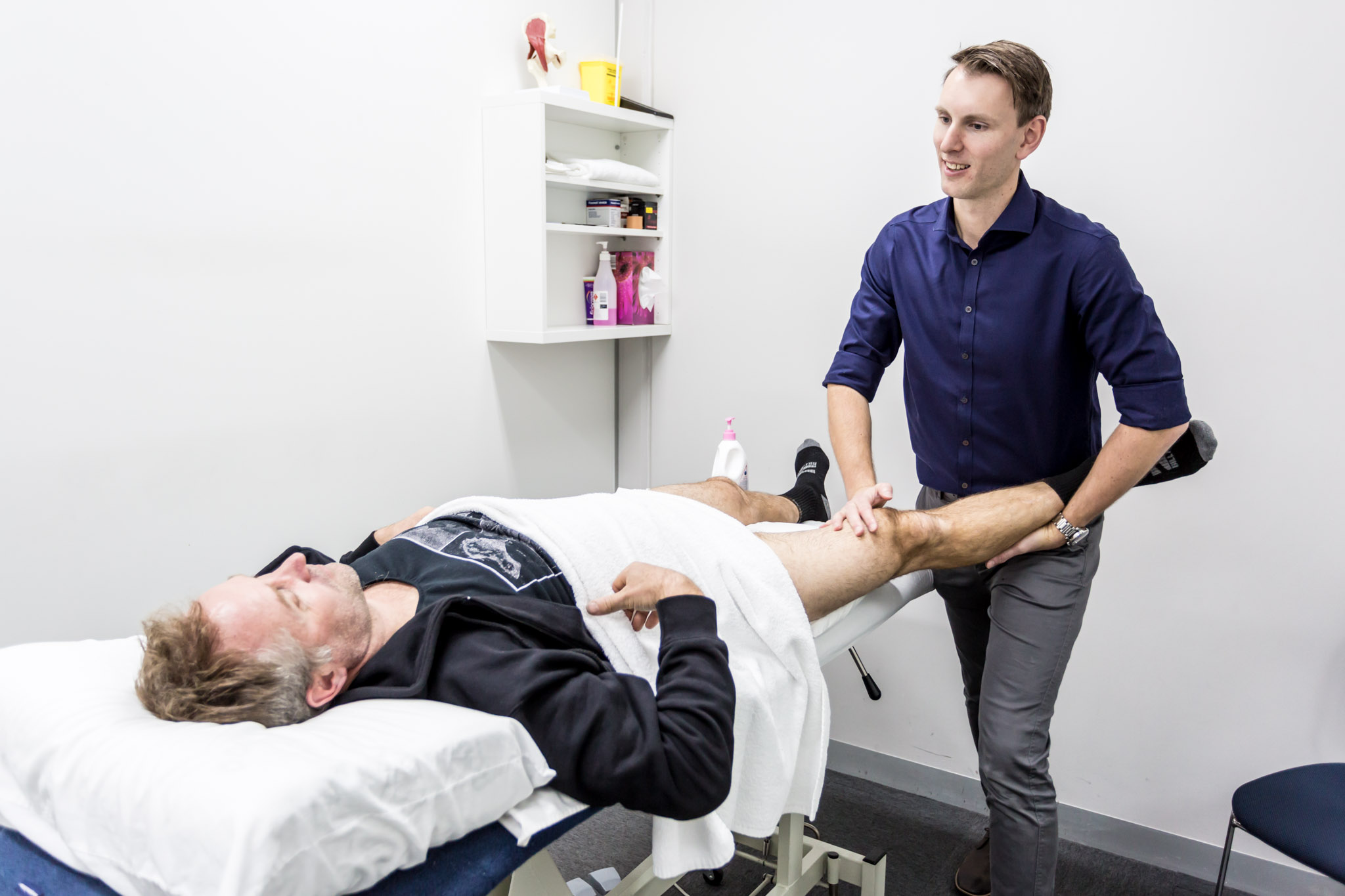
We know how important team work is for achieving great results, that’s why we work closely with some of the best allied health practitioners in the Ferntree Gully area. Travis from Pathways Physio is one of those. We caught up with him recently for a chat.

Trav, fill me in on your road into Physio and how you came to choose and settle in Ferntree Gully?
Thanks Liam. My road to Physiotherapy was pretty typical of most people getting into Physio… I loved Sports, and I was playing Basketball at a relatively high level, but knew I wasn’t good enough to make it to the Elite level. But I still wanted to stay connected to sports in my career, so I decided that I wanted to be a Sports Physiotherapist in order to travel and work with a Sports team.
Of course I realised after serving my early career working at Geelong Hospital, and then at Caulfield Rehab facility where I was teaching amputees how to walk, rehabilitating stroke sufferers, and trying to help people that had suffered severe head injury, that there is so much more to Physiotherapy than working in sports. And that I could actually help and serve people that really needed it within the local community.
So I moved and managed a Physiotherapy private practice in Bayswater, where I learnt a lot about treating a variety of pain disorders and musculoskeletal injuries, as well as teaching Clinical Pilates. I also learnt a lot about leadership, and teaching younger Physio’s, which is why I decided to start my own private practice in Ferntree Gully.
And now I absolutely love Ferntree Gully – I love the people, the sense of community, and really get a kick out of helping people recover from very challenging situations, to running up and down the 1000 steps again, going for walks around the old quarry, or riding their bikes up Mt Dandenong.
What is the path you’ve taken since and fill me in on what you specialise in?
So as part of my journey in Physiotherapy, I decided to go back to University to complete my Graduate Certificate in Sports Physiotherapy, and then my Masters in Musculoskeletal Physiotherapy, which was a fairly gruelling process whilst also starting a business and a family!
But throughout that time I was fortunate enough to spend time with some absolute giants in Physiotherapy and developed a real passion for treating hip pain.
I was fortunate enough to spend a lot of time with Joanne Kemp, who is at the coalface of research looking into best treatments for hip joint pain, most famously FAI (Femeroacetabular Impingement). And developing Physiotherapy Rehabilitation programs to avoid hip arthroscopic surgery altogether, or at the very least ensure the best possible outcomes with rehab after surgery.
I’ve also been working collaboratively with a handful of great, open-minded Orthopaedic Surgeons, including Mr Francis Ma, to develop programs to either help patients avoid surgery, or to help achieve the best outcomes following hip surgery.
Many people we see present with foot pain and we often assess them for problems further up the body. From someone who works on the whole body, how do the hips and knees affect what is happening in the feet?
Something often missed when assessing someone’s pain, is the interaction between all the major joints of the entire lower body including the foot and ankle, the knee and the hip and pelvis. I’ve seen many cases, for example, where knee pain is being caused by a lack of stability within the foot.
One of the great benefits of working with a great Podiatrist such as yourself Liam, and your team, is that we can work collaboratively to ensure that all parts of the body are working well and are in sync together.
During the ongoing COVID-19 pandemic many people’s lives have changed with both work and recreation being two big areas of difference. How has this affected the types of patients and conditions you’ve been seeing in your clinic?
It’s certainly been an unprecedented time for all! In general more people are sitting more whilst working from home, and the incidental walking that often happens around the office is lacking. Desk setups in general aren’t quite as good at home, and we’ve seen an increase in people with neck, back and shoulder pain as a result.
It’s also been more challenging to stay active and exercise, which has also contributed, I think, to more people presenting with low back and hip pain. As people start to get back into exercise and sport it’s going to be really important that people ramp up their training slowly, pace themselves, and listen to their body. Otherwise I think we’ll see more exercise-related injuries such as heel pain, shin splints, knee and shoulder pain.
The one thing I’ve been really surprised but also delighted about, has been the general content provided on social media and even on TV about how to minimise the impact of isolation on physical and mental health. Clearly this is a big concern, and in the past it probably wouldn’t have been acknowledged or even talked about. But I think as a whole, there’s been a number of initiatives looking at increasing awareness and programs set up to help people that may be struggling with this.
What are some of the tips you’ve got for people now working from home and completing home fitness programs? How can a Physio help those that are experiencing problems?
It seems as though working from home is going to become a more permanent arrangement for many businesses, so having your home workspace assessed by an OH&S rep within your company is really important. Sit-stand desks are awesome, but if they’re not within your budget, then get into a habit of standing up from your desk regularly (eg every 30 mins) to go for a quick walk around the house, do some stretches, or do some exercise. If you can, organise walking meetings with your work colleagues, whack your headphones in and join the meeting whilst getting your steps in.
Getting back into exercise is going to be really important too, and in fact, working from home should give people more flexibility to be able to prioritise exercise into their day. But just remember to listen to your body, ramp up the intensity of your work outs slowly, and don’t skip leg day 🙂. Strength training, and in particular leg strengthening, is really important to prevent common leg and foot injuries when participating in cardiovascular exercise such as running or playing sport.
Travis is the Titled Physiotherapist and Director at Pathways Physiotherapy in Ferntree Gully.
To learn more tips on how to reduce pain whilst working from home READ MORE
To learn more about how to get back into exercise following isolation READ MORE